Harnessing AI to Combat Health Inequalities: A New Frontier in Preventative Healthcare
Health inequalities remain a significant issue in healthcare systems worldwide, with certain populations experiencing disparities in health outcomes, access to care, and overall well-being. Despite advancements in medical technology and increased awareness, these disparities continue to persist, highlighting the need for innovative solutions to bridge the gap and ensure equitable healthcare for all.
These inequalities not only affect the quality of life for millions but also place immense pressure on the healthcare system. Vulnerable groups, including the elderly and minorities, often bear the brunt of these disparities, facing higher risks of chronic diseases and barriers to accessing care.
Understanding Health Inequalities: the scale of the problem
Health inequalities refer to systematic differences in health status, access to healthcare services, and health outcomes between different population groups. These disparities are often avoidable and considered unfair, as they stem from social, economic, and environmental factors rather than biological differences. A constant influx of new high-need patients presents a significant challenge for healthcare providers in terms of resource allocation and preventative care.
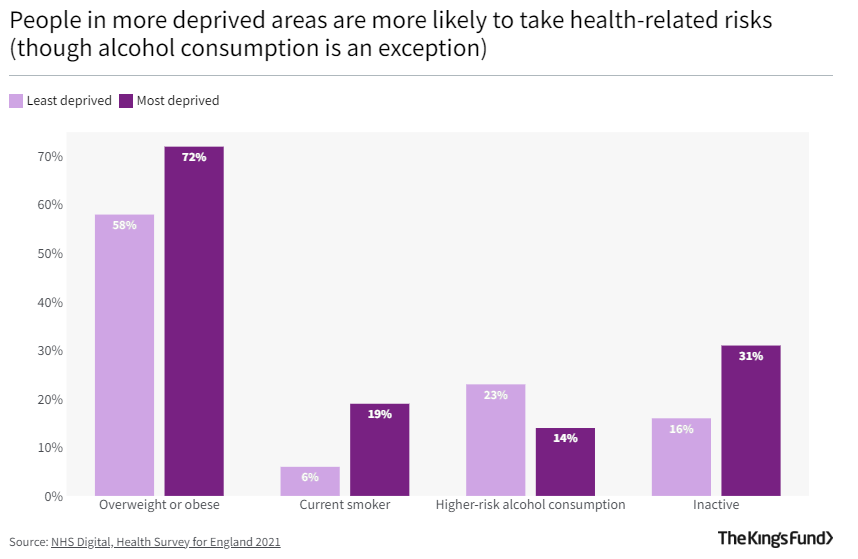
Figure 1: Influence of risks associated with health inequalities, Kings Fund)
Several interconnected factors contribute to health disparities. Socioeconomic status, including income, education, and occupation, significantly influences health outcomes. Lower socioeconomic groups often face barriers to accessing quality healthcare and may experience higher rates of chronic diseases. Ethnicity also plays a role, with racial and ethnic minorities frequently experiencing disparities in health outcomes due to a complex interplay of social, economic, and cultural factors.
Locality can impact health, with rural areas often facing challenges in accessing specialised healthcare services compared to urban centres. Gender-based disparities in health outcomes persist, with differences in disease prevalence, treatment efficacy, and healthcare access between men and women. Age is another factor, as older adults may face unique health challenges and barriers to care, contributing to age-related health inequalities.
The impact of health inequalities on individual and population health is far-reaching. Disadvantaged groups often experience reduced life expectancy, higher rates of chronic diseases and disability, and increased healthcare costs due to delayed treatment and preventable complications. These disparities also have wider societal impacts, including reduced productivity and economic growth.
AI-Powered Solutions for Addressing Health Inequalities
As healthcare systems grapple with persistent health inequalities, innovative technologies like artificial intelligence (AI) offer promising solutions to bridge the gap and improve health outcomes for all.
HN's AI-powered predictive analytics provide a groundbreaking approach to tackling health inequalities. Our advanced algorithms can accurately identify approximately 80% of patients at high risk of disease progression and hospitalisation six to twelve months in advance. This early identification allows healthcare providers to intervene proactively, potentially preventing health crises and reducing the burden on emergency services. By leveraging advanced machine learning algorithms and vast datasets, our solution aims to revolutionise healthcare delivery and promote health equity.

(Figure 2: How HN’s AI solution works)
By pinpointing individuals at highest risk, our AI enables healthcare providers to allocate resources more effectively and implement tailored interventions. This targeted approach can significantly improve health outcomes for vulnerable populations.
One of the key features of our AI platform is its ability to conduct real-time population health screening at an individual level. This approach allows for continuous monitoring of health indicators across diverse populations, identification of at-risk individuals who may otherwise go unnoticed, and tailored interventions based on individual risk profiles and needs. Our AI algorithm can quickly analyse complex health data to identify potential health risks. This capability enables timely interventions to prevent or mitigate health complications, and improved management of existing health conditions supported by our clinical coaching services.
Benefits of Predictive and Preventive Healthcare
The implementation of AI-driven predictive and preventive healthcare strategies offers numerous benefits for both patients and healthcare systems. We can identify high-risk patients 6-12 months in advance of potential health crises. This early warning system allows healthcare providers to implement targeted interventions to prevent disease onset or progression, allocate resources more effectively to those most in need, and reduce the burden of acute care and hospitalisations.
By enabling proactive healthcare interventions, AI-powered solutions can significantly improve clinical outcomes. This includes improved quality of life for patients with long-term conditions, and enhanced patient engagement and self-management of health.
Predictive and preventive healthcare approaches powered by AI can lead to substantial cost savings for healthcare systems. These savings come from decreased emergency department visits and hospital admissions, reduced need for expensive treatments and procedures, and more efficient allocation of healthcare resources.
HN's AI-driven approach has been successfully implemented within the National Health Service (NHS) in the United Kingdom, demonstrating its potential to address health inequalities on a large scale. HN has partnered with several NHS trusts and Integrated Care Systems (ICS) to deploy our AI platform. The implementation focuses on identifying high-risk patients within local populations, providing actionable insights to healthcare providers, and supporting the development of targeted intervention strategies.
Randomised controlled trials conducted in collaboration with NHS partners have shown promising results. These include significant reductions in hospital admissions for high-risk patients, improved management of chronic conditions such as diabetes and heart disease, and enhanced patient satisfaction and engagement with healthcare services.
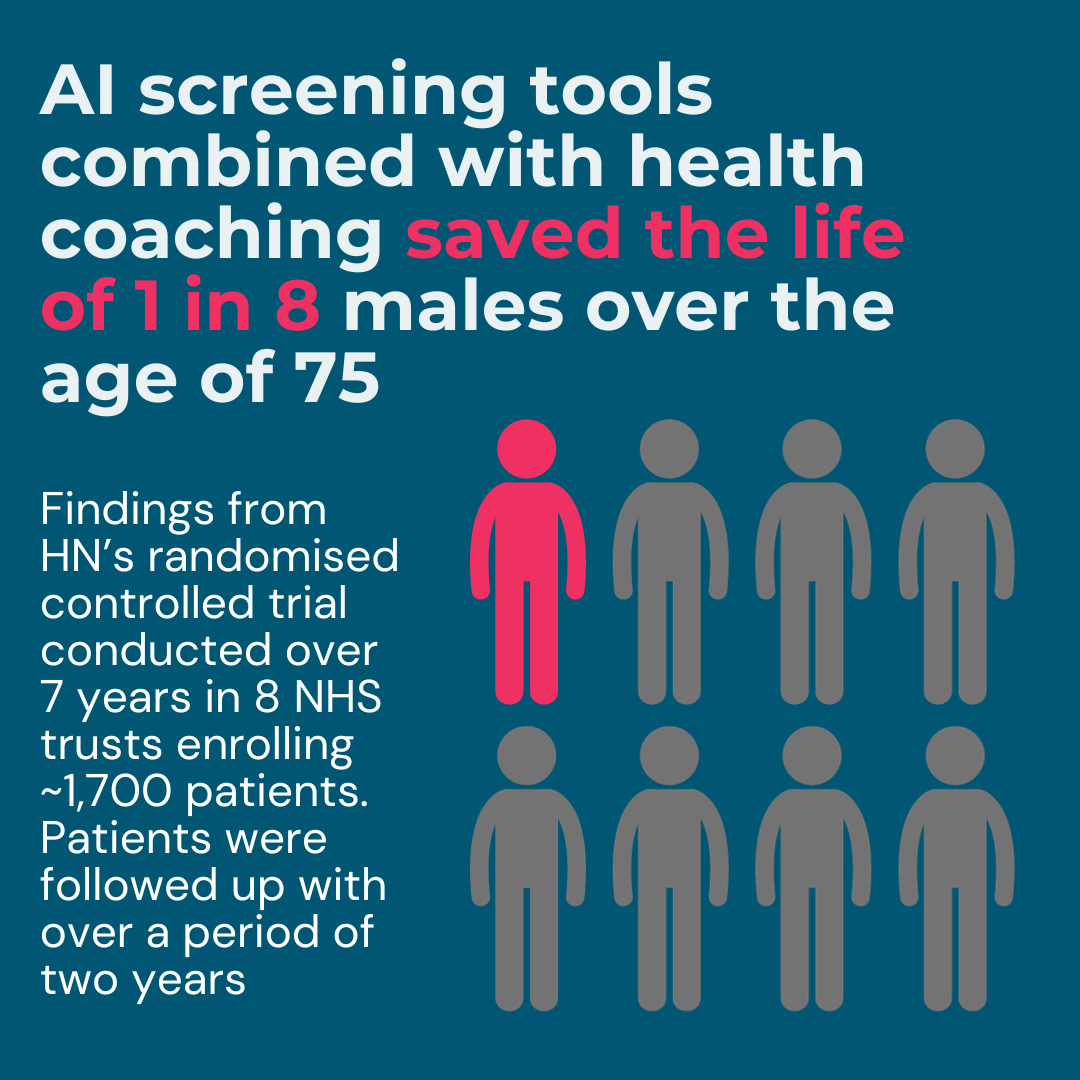
(Figure 3: Results from HN’s RCT)
In Staffordshire, we achieved a remarkable 30% reduction in hospital care costs per patient. By forecasting healthcare demand and predicting outcomes, we were able to allocate resources more efficiently, ensuring that those most in need received timely care.
Dr. Paddy Hannigan, Clinical Lead at Staffordshire & Stoke-on-Trent ICS, shared his experience with HN: "The implementation of HN Company's AI platform has transformed our approach to population health management. We've seen remarkable improvements in our ability to identify and support high-risk patients, leading to better health outcomes and more efficient use of our resources.” This example highlights how AI-powered predictive analytics can not only reduce costs but also enhance the quality and efficiency of care delivery.
The Crucial Role of Data
At the heart of HN's AI-powered approach is the utilisation of comprehensive, linked routinely collected data and a detailed health equity delivery protocol. Our advanced algorithms analyse vast amounts of patient data to derive powerful insights about future health risks. This process transforms historical medical records into actionable insight that can significantly improve care delivery and patient outcomes.
Our AI solution examines a wide range of patient data, including medical history, demographic information, and social determinants of health, to create a holistic view of each individual's health risks. By continuously incorporating new data, our system allows for dynamic risk assessments and timely interventions. Additionally, our algorithms identify subtle patterns and correlations in large datasets, enabling the detection of early warning signs of health issues that might be missed by traditional methods.
Ethical Considerations and Challenges
As we harness the power of AI to address health inequalities, it is crucial to acknowledge and address the ethical considerations and challenges that come with this technology. Protecting patient data is paramount; HN employs state-of-the-art security measures and adheres to all relevant data protection regulations to ensure the confidentiality and integrity of sensitive health information.
We also recognise the potential for AI algorithms to perpetuate or exacerbate existing biases. HN is committed to ongoing monitoring and refinement of our algorithms to ensure they are fair and equitable across all demographic groups. Transparency and explainability are essential; it is vital that healthcare providers and patients understand how AI-driven decisions are made. We strive to make our algorithms as transparent and explainable as possible, fostering trust in the technology.
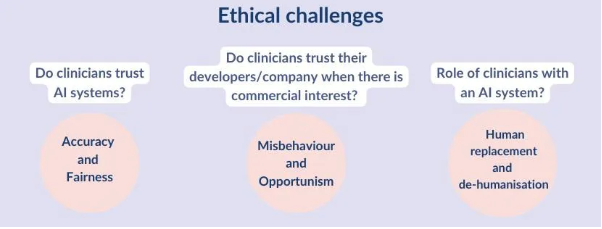
(Figure 4: What can humans do to guarantee an ethical AI in healthcare? Part II | Feature from King's College London)
Integrating AI solutions within established healthcare infrastructures can be challenging. HN works closely with healthcare providers to ensure seamless integration and adoption of our technology. Finally, the healthcare landscape is constantly evolving, and we are committed to ongoing research and development to continually validate and improve the accuracy and effectiveness of our predictive models.
The Future of Health Equity
While AI-powered solutions like HN’s platform offer tremendous potential for addressing health inequalities, challenges remain in achieving true health equity. Ongoing challenges include ensuring equitable access to AI-driven healthcare technologies, addressing potential biases in routine data and algorithm design, balancing privacy concerns with the need for comprehensive health data, and integrating AI solutions into existing healthcare systems and workflows. Additionally, challenges such as fragmented data systems, limited interoperability, and slow adoption of digital technologies further complicate efforts to harness AI effectively in healthcare.
Despite these challenges, the future of health equity looks promising with the continued development of AI and data-driven solutions. HN remains dedicated to leveraging AI technology to address health inequalities and improve healthcare access for all populations. Our ongoing efforts include collaborating with healthcare providers and policymakers to implement AI solutions, continuously refining and expanding our solutions to address diverse health needs and advocating for the responsible and ethical use of AI in healthcare.
As we look to the future, it is crucial for healthcare providers, policymakers, and technology companies to work together in embracing and implementing these innovative solutions. By doing so, we can take significant strides towards achieving true health equity and ensuring that quality healthcare is accessible to all, regardless of socioeconomic status, ethnicity, or geographic location.